• Skip to secondary menu
  • Skip to main content
  • Skip to primary sidebar

Micronesia Land Grant Program

Good things are happening!

  • Home
  • About Us
    • Welcome to our website
    • Administration
    • Board of Regents
    • College of the Marshall Islands & Land Grant Program
    • College of the Micronesia – FSM & Land Grant Program
    • Palau Community College & Land Grant Program
    • Micronesia Land Grant Locations Map
    • Frequently asked questions
    • Contact Us
  • Land Grant people
    • All Micronesia Land Grant People
    • Micronesia Land Grant Administration & Regional Projects People
    • College of Micronesia-FSM Land Grant Administration
    • COM-FSM Chuuk Campus People
    • COM-FSM Kosrae Campus People
    • COM-FSM Pohnpei Campus People
    • COM-FSM Yap Campus People
    • College of Marshall Islands People
    • Palau Community College people
  • Research
    • Marshall Islands Agricultural Research Station
    • College of Micronesia – FSM – Research
      • Chuuk Agricultural Experiment Station
      • Kosrae Agricultural Experiment Station
      • Pohnpei Agricultural Experiment Station
      • Yap Agricultural Experiment Station
    • Palau Agricultural Experiment Station
    • Special Research Projects
  • Extension
    • College of the Marshall Islands – Extension
    • College of Micronesia – FSM – Extension
      • Chuuk Cooperative Extension Service
      • Kosrae Cooperative Extension Service
      • Pohnpei Cooperative Extension Service
      • Yap Cooperative Extension Service
    • Palau Community College – Extension
  • Instruction
    • College of the Marshall Islands – Resident Instruction
    • College of Micronesia – FSM – Resident Instruction
    • Palau Community College – Resident Instruction
  • Publications
  • Links
  • Job openings

Archives for July 8, 2013

Assessment of in vivo and in vitro grafting for rapid production of elite grafted lime seedlings

July 8, 2013

KOSRAE, FSM. Dr. Virendra M. Verma, Researcher/Extension Specialist, Kosrae Agricultural Experiment Station.

Dr. Verma, Project Director of grafting project procured budwood of Mexican lime from the Citrus Clonal Protection Program, University of California and the United States Department of Agriculture National Clonal Germplasm Repository for Citrus & Dates. Procured Mexican lime budwood was grafted on sour orange rootstock. For subsequent growth grafted plants were kept in the greenhouse. Seeds of sour orange were surface sterilized with commercial sodium hypochlorite bleach and in vitro aseptic cultures of sour orange were established for rootstock production. Murashige and Skoog, 1962 (MS) medium augmented with different concentrations of 6-furfurylaminopurine, 6-benzylaminopurine and indole-3-acetic acid was used for initiation and establishment of sour orange rootstock cultures. Nodal explants of Mexican lime were surface sterilized with commercial sodium hypochlorite bleach and lateral shoot buds were used for in vitro grafting experiments. Subsequent passages were given every four weeks on MS medium augmented with different concentrations of 6-furfurylaminopurine, 6-benzylaminopurine and indole-3-acetic acid for further growth. Data for in vivo and in vitro grafting experiments were recorded every week.
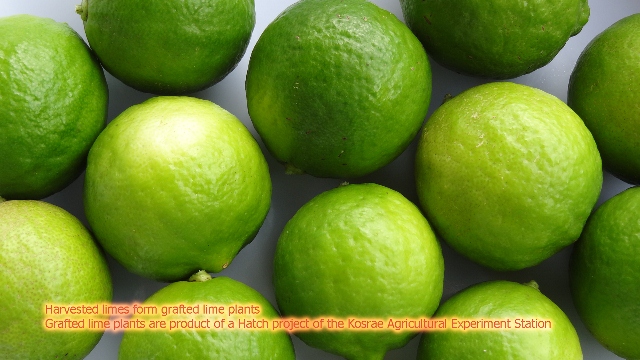
Lime is a valuable crop.

Both in vivo and in vitro grafting experiments showed positive results and sour orange rootstock accepted Mexican lime and Mexican lime thorn-less budwood. In vivo grafting experiments were performed during summer with 40% success rate for Mexican lime thorn-less budwood on sour orange rootstock while 10% success rate for Mexican lime budwood on same rootstock. In vivo grafted plants showed sprouting in the new bud during spring. In vitro grafting experiments were performed with 48% success rate for Mexican lime thorn-less budwood on sour orange rootstock. Participants skills and knowledge about in vitro and in vivo grafting techniques have been increased through collection and review of related literature; experimentation on in vitro and in vivo grafting; establishment of cultures; development of in vitro and in vivo grafting protocols; and production of elite grafted lime seedlings. The project has developed positive attitudes, zeal for learning techniques and has changed the behavior of the participants. Based on the data analysis of research carried out through this project, another project on mass-production of elite grafted citrus seedlings will be initiated.
Filed Under: Kosrae Research, News from land grants Tagged With: grafting, Kosrae, lime

Extensive publications, education and outreach

July 8, 2013

KOSRAE, FSM. Dr. Virendra M. Verma, Researcher/Extension Specialist, Kosrae Agricultural Experiment Station.

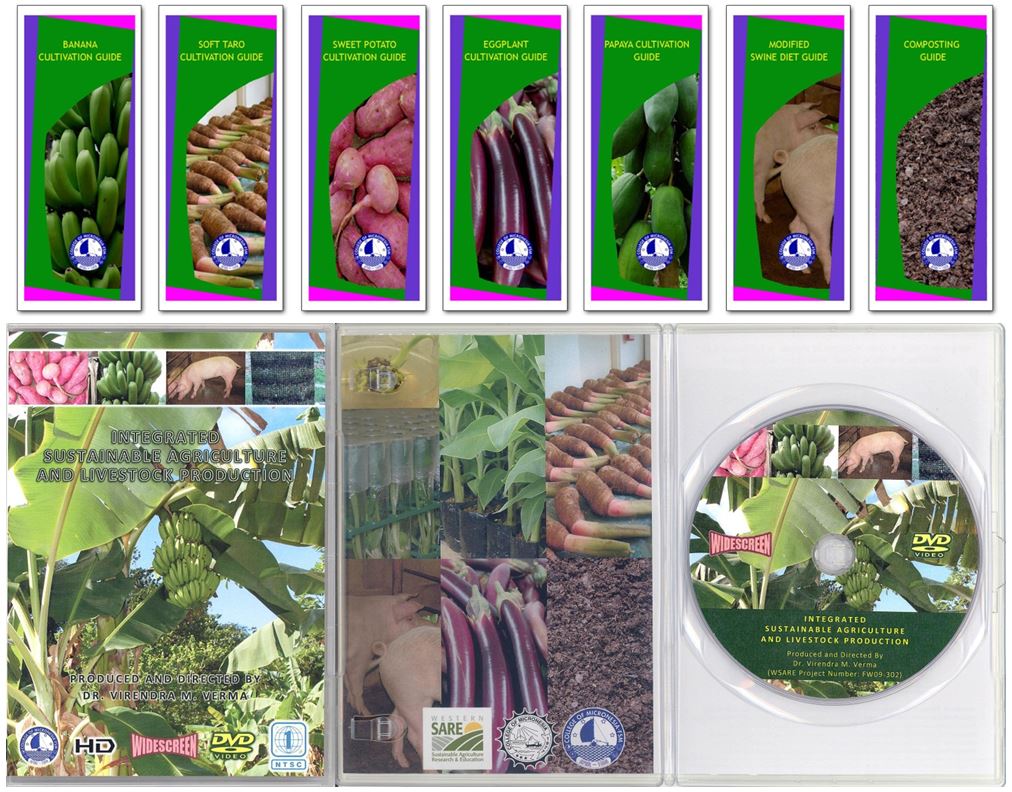
Dr. Verma, Project Coordinator of Western Sustainable Agriculture Research and Education (WSARE) project on on-farm implementation and demonstration of integrated sustainable agriculture and livestock production systems for small-scale farmers, developed seven multi-colored cultivation guides on banana, soft taro, sweet potato, eggplant, papaya, composting and swine diet and distributed to workshop participants and other interested people. Dr. Verma also developed a high definition digital video for extension, education and outreach on tissue culture multiplication, acclimatization, banana cultivation, soft taro cultivation, sweet potato cultivation, papaya cultivation, eggplant cultivation, fertilizer and compost application, harvesting, storing and composting. The copies of the video in HD-DVDs format are being delivered to telecommunication companies to telecast in Palau, Yap, Chuuk, Pohnpei, Kosrae and Marshall Islands on local cable channels to educate wider island communities.

New publications for local growers.


Filed Under: Kosrae Research, News from land grants Tagged With: Kosrae, publications

Integrated sustainable agriculture and livestock production workshops

July 8, 2013

KOSRAE, FSM. Dr. Virendra M. Verma, Researcher/Extension Specialist, Kosrae Agricultural Experiment Station.

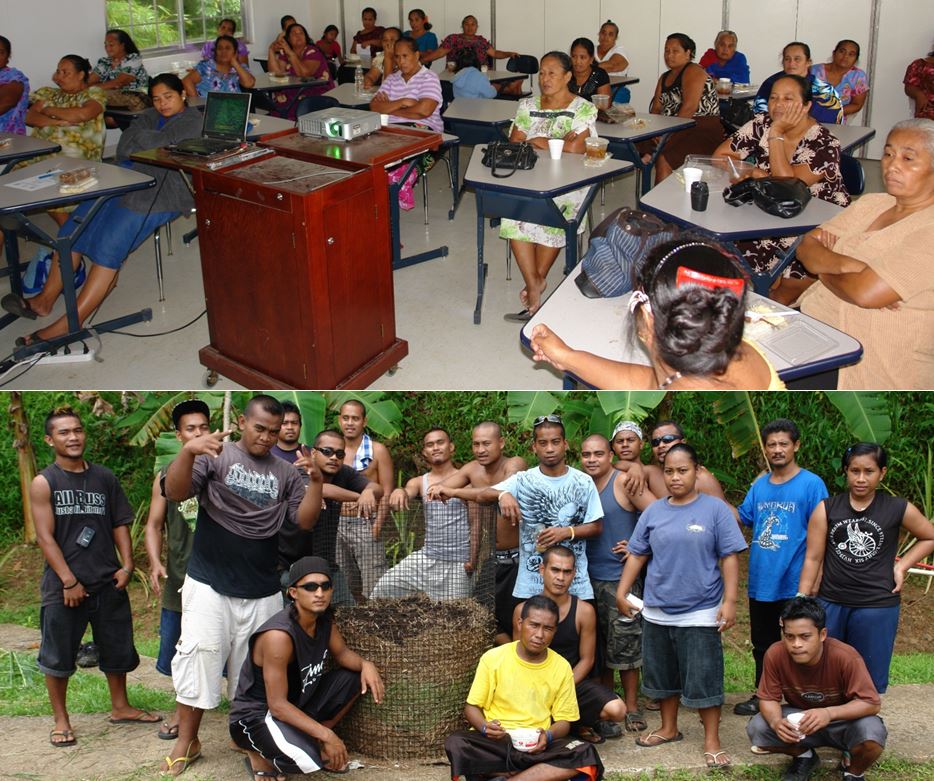
Dr. Verma, Project Coordinator of Western Sustainable Agriculture Research and Education (WSARE) project on on-farm implementation and demonstration of integrated sustainable agriculture and livestock production systems for small-scale farmers, organized two one-week workshops for participants. Eighty-one participants including agriculture college students, agriculture high school students, farmers and women attended the workshops. Extensive PowerPoint presentations and hands-on activities were organized to make participants acquainted with tissue culture multiplication, acclimatization, banana cultivation, soft taro cultivation, sweet potato cultivation, diseases and nutrient deficiency symptoms and control, insect and pest control, fertilizer and compost application, harvesting, storing and composting. Seven multi-colored cultivation guides on banana, soft taro, sweet potato, eggplant, papaya, composting and swine diet were prepared and distributed to participants.

Workshop participants.

Filed Under: Kosrae Research, News from land grants Tagged With: agriculture, Kosrae, livestock, sustainable

Ecologically integrated and well managed hot composting system for recycling of organic matter

July 8, 2013

KOSRAE, FSM. Dr. Virendra M. Verma, Researcher/Extension Specialist, Kosrae Agricultural Experiment Station.

Organic matters such as crop residues and animal manure were used for composting. Solid swine manure was separated from the piggery effluent by using a rundown screen and sun dried for two weeks. Dried solid manure was shredded along with the dried organic materials such as crop residues, and was used as brown material (carbon rich) for composting. All fresh and green organic materials were shredded while still fresh and were used as green material (nitrogen rich) for composting. Hot composting technique was implemented to convert the nutrient-rich crop residues and swine manure into valuable compost at the Kosrae Agricultural Experiment Station. A six inch layer at the bottom of the compost pile was filled with coconut husk for better air circulation. Green and brown materials were layered alternately and on each layer a half inch thick layer of finished compost, and fresh and healthy soil from the forest was added as an activator. Aerobic process was used for decomposition of organic matters. High microbial activities generated heat that was regulated and maintained within the required range of 140-158oF in the composting pile by appropriate air circulation and proper moisture maintenance during heating phase. The pile was turned once in a week and treated effluent from the piggery was sprayed to control and maintain appropriate temperature and moisture, respectively. The heating phase gradually changed into a cooling phase and decomposition occurred without much generation of heat, and temperature dropped slowly up to 86oF. At the end of decomposition, during the maturation phase, the temperature dropped 68-77oF and resulted in finished compost. This ecologically integrated and well managed system composted the crop residues, manure and spilled feed in less than 3 months.

composting
Top left to clockwise: Shredded green material for composting, shredded brown material for composting, green and brown layers in compost pile, and finished compost ready to use.

Filed Under: Kosrae Research, News from land grants, Uncategorized Tagged With: compost, Kosrae

PCC-CRE assists Typhoon “Bopha” victims cope up with food security problems

July 8, 2013

NGAREMLENGUI STATE, PALAU. Dr. Aurora G. Del Rosario, Researcher/Extension Specialist, Palau Community College Research and Development Station.

In December 2, 2012, Palau was badly hit by Typhoon “Bopha”. Most severely affected were the states of Ngaraard, Ngiwal, Melekeok and Ngchesar in East Coast of Babeldaob as well as the outer islands of Peleliu, Angaur and Kayangel. Big waves brought the sea water and sand inland into the homes along the shoreline and left a lot of damaged houses, schools, roads, and infrastructures. In some areas, salt water flooded the roads and houses up to 4 to 6 feet at the height of the typhoon. Salt water also inundated taro patches, damaged the mesei resulting in burned taro plants. Even tall betel nut trees were severely affected by the salt water coming inland into the islands. Thus, food supply and food security of the community was endangered. PCC-CRE extended assistance to the affected communities by assisting them in establishing their farms and gardens as part of relief efforts to victims of Typhoon Bopha.

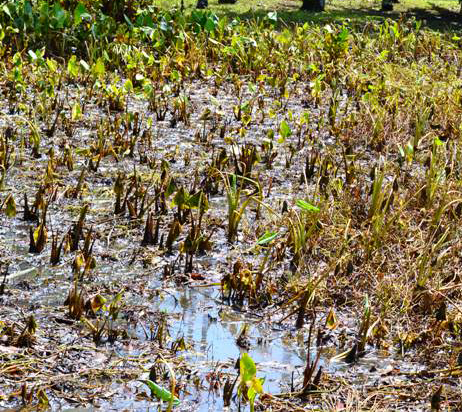
Salt water damages taro.

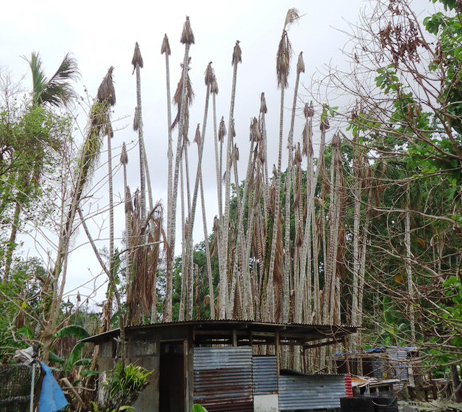
Salt water damage to betel nuts in Peleliu.

In January, 9 farms in Ulimang, Ngkeklau and Choll in the state of Ngaraard were plowed and planted with sweet potato, cassava and taro. In Melekeok, 14 community farms were also plowed and planted with cassava, taro and sweet potato. In February 5 – 7, 2013, PCC-CRE worked with the Bureau of Agriculture in assisting 81 residents of Peleliu State by plowing backyards, established vegetable gardens and also planted taro and sweet potato. In March 14 - 16, 2013, PCC-CRE Staff also assisted 48 residents of Angaur State and provided planting materials to establish sweet potato, taro and vegetable gardens. Finally, in March 29-31, 2013, PCC-CRE staff went to Kayangel Island to assist 14 farmers in plowing, and planting sweet potato, cassava and taro. Vegetable seeds and compost were also distributed to the farmers. All these efforts were done to ensure food security in the communities in the coming months.

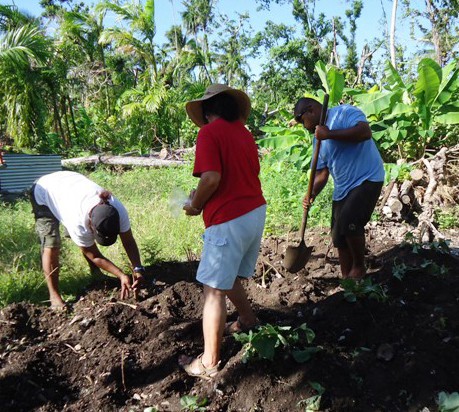
Planting cassava and sweet potato in Ngaraard.

Planting taro and sweet potato in Angaur.

Filed Under: News from land grants, Palau Research Tagged With: food security, Palau, typhoon

Primary Sidebar

Visit our programs

  • College of the Micronesia - FSM & Land Grant Program
  • College of the Marshall Islands & Land Grant Program
  • Palau Community College & Land Grant Program

Most frequently used words in tags

agriculture banana Bangladeshi biochar Black pepper chicken Chuuk climate change collaboration compost container gardening crab entomology Extension food security fruits grafting Kosrae lime livestock mangroves Marshall Islands outer islands outreach Palau Pearl pest Pineapple Pohnpei publications root crops salt tolerant smart climate agriculture sustainable sweet potato taro tissue culture training typhoon urban gardening vegetables World food day Yap Yap Day youth

For college staff

  • For staff

Locations of Micronesia Land Grant

July 2013
M T W T F S S
« Jun   Feb »
1234567
891011121314
15161718192021
22232425262728
293031  

and more . . .

Pearl farm management and halfpearl seeding training in Pakin Atoll, Pohnpei State, February 5-7, 2104

KOLONIA, POHNPEI, FSM. Dr. Manoj R. Nair (1) and Justino Smith (2) (1) Director & Chief Scientist, COM Land Grant … [Read More...] about Pearl farm management and halfpearl seeding training in Pakin Atoll, Pohnpei State, February 5-7, 2104

http://www.micronesialandgrant.org/wp-admin/

Copyright © 2022 ·Lifestyle Pro · Genesis Framework by StudioPress · WordPress · Log in