• Skip to secondary menu
  • Skip to main content
  • Skip to primary sidebar

Micronesia Land Grant Program

Good things are happening!

  • Home
  • About Us
    • Welcome to our website
    • Administration
    • Board of Regents
    • College of the Marshall Islands & Land Grant Program
    • College of the Micronesia – FSM & Land Grant Program
    • Palau Community College & Land Grant Program
    • Micronesia Land Grant Locations Map
    • Frequently asked questions
    • Contact Us
  • Land Grant people
    • All Micronesia Land Grant People
    • Micronesia Land Grant Administration & Regional Projects People
    • College of Micronesia-FSM Land Grant Administration
    • COM-FSM Chuuk Campus People
    • COM-FSM Kosrae Campus People
    • COM-FSM Pohnpei Campus People
    • COM-FSM Yap Campus People
    • College of Marshall Islands People
    • Palau Community College people
  • Research
    • Marshall Islands Agricultural Research Station
    • College of Micronesia – FSM – Research
      • Chuuk Agricultural Experiment Station
      • Kosrae Agricultural Experiment Station
      • Pohnpei Agricultural Experiment Station
      • Yap Agricultural Experiment Station
    • Palau Agricultural Experiment Station
    • Special Research Projects
  • Extension
    • College of the Marshall Islands – Extension
    • College of Micronesia – FSM – Extension
      • Chuuk Cooperative Extension Service
      • Kosrae Cooperative Extension Service
      • Pohnpei Cooperative Extension Service
      • Yap Cooperative Extension Service
    • Palau Community College – Extension
  • Instruction
    • College of the Marshall Islands – Resident Instruction
    • College of Micronesia – FSM – Resident Instruction
    • Palau Community College – Resident Instruction
  • Publications
  • Links
  • Job openings

Archives for June 2013

Sweet potato and taro multiplication demonstration sites established at three regions in Chuuk

June 21, 2013

WENO, CHUUK, FSM. Dr. Lolita Ragus, Researcher/Extension Specialist, Chuuk Agricultural Experiment Station.

COM-FSM Chuuk Campus/Cooperative Research and Extension (CRE) distributed eight promising sweet potato and two taro cultivars evaluated from April 2012 to March 2013 for tolerance to drought and salt spray. Chuuk CRE acknowledged PASAP project for making these materials available for evaluation under coastal and upland environments. Furthermore, SPC CePaCT provided these cultivars to the MPPRC, COM-FSM KAES, which further multiplied them in tissue culture, acclimatized in the greenhouse and provided to the four COM-FSM campuses. Also, KAES undertook local taro collection, which underwent similar processes as sweet potato. The Australian government funded this project, which was implemented through the joint partnership of the FSM Office of Environment and Emergency Management, COM-FSM CRE and SPC Land Resources Division (North Pacific).

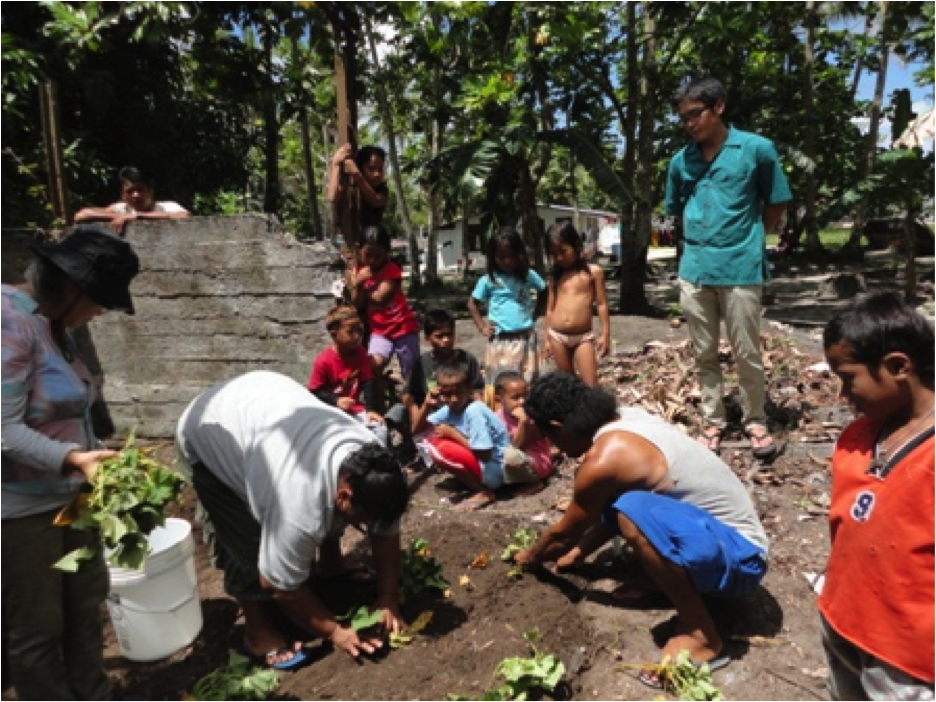
On the other hand, CRE Global Food Security and Hunger and Climate Change programs and PASAP project collaborated in plant distribution and establishment of multiplication sites also serving as demonstration plots in the three Chuuk regions. The Department of Agriculture provided its motorboat and participated in this activity. Chuuk CRE coordinated with the respective island local governments for island-wide sharing of planting materials and skills gained from training. Likewise, Mortlocks and Northwest regions got their planting materials through Private Sector Grant funded-Agroforestry programs.

Two hundred sixty participants benefitted from this endeavor as detailed below:

  • Faichuk (Romanum-43; Eot- 35; Udot-32; Polle-33)—-143
  • Northern Namoneas (Weno-34; Fono-26)——————- 60
  • Southern Namoneas (Fefen-29; Tonoas-28)—————- 57

Fefen Mayor Serino Tokyo remarked “I will make it sure that these planting materials will go to the villages where our people would share and take advantage of this opportunity”. Overall, these communities expressed their happiness and thanks for this effort.
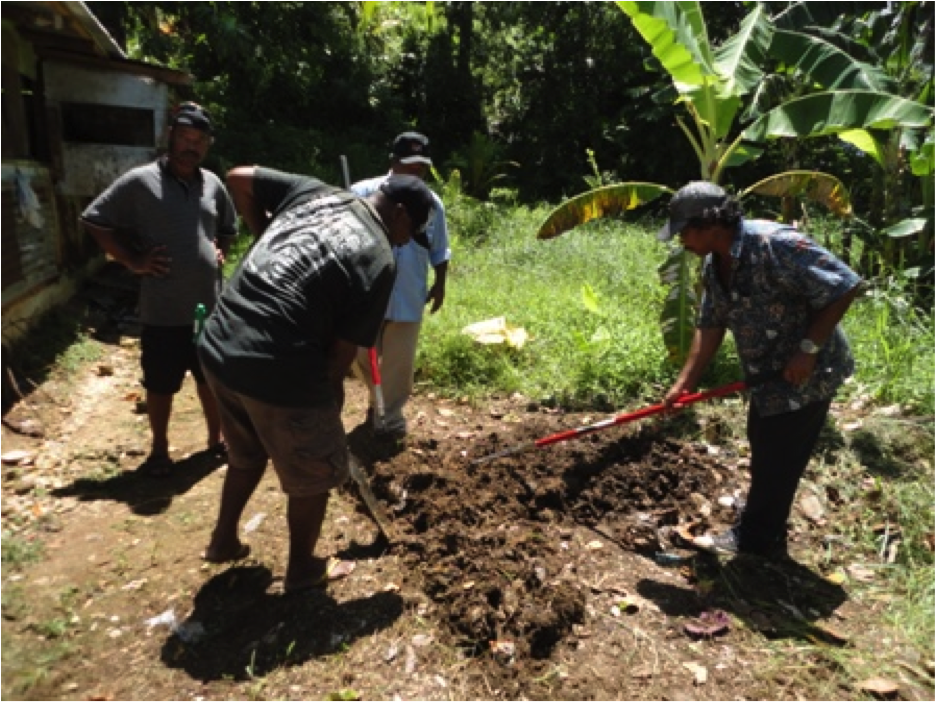
Fefen Island Mayor Serino Tokyo (extreme right) led in preparing plots.
Children in Polle Island watched the sweet potato planting demonstration.


Filed Under: Chuuk Research, News from land grants Tagged With: Chuuk, sweet potato, taro

Island Farm – a success story

June 18, 2013

COLONIA, YAP, FSM. Dr. Murukesan Krishnapillai, Researcher/Extension Specialist, Yap Agricultural Experiment Station.

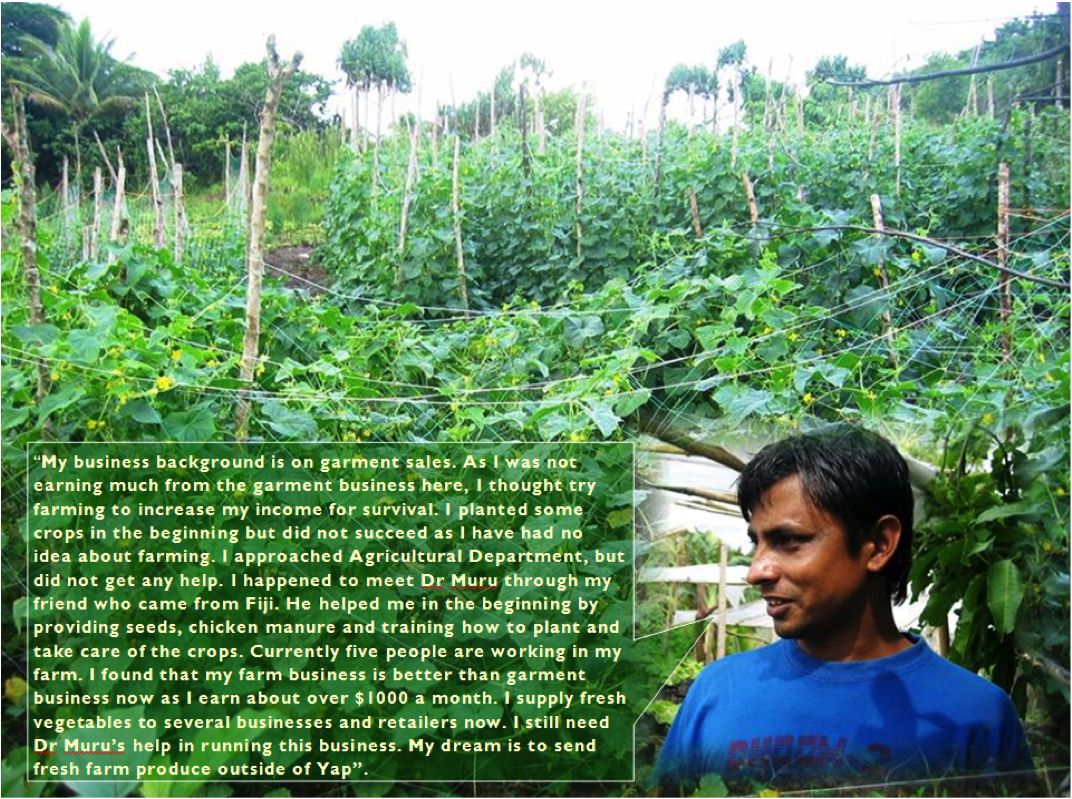
Island Farm (Aringel village, Dalipebinaw Municipality, Yap) was established by a Bangladeshi immigrant in early 2009 as a vegetable garden for survival. Later, more crops were incorporated with technical assistance and extension support from Yap Agricultural Experiment Station. Over the years Yap AES provided several hands-on trainings on topics ranging from nursery management, nutrient management, pest management, soil preparation and composting. This small farm is now well established and catering local markets with vegetables like Chinese cabbage, eggplant, okra, cucumber, peppers, watermelon, long beans, sweet potato, tomatoes, pumpkins etc.

Impacts achieved
Thanks to the hard work and dedication of its owners, Island Farm showed a remarkable achievement in the last few years of operation. Success (impact) was measured in terms of income generated (cost-benefit ratio) from the farming operations. Client reports a gross sale of over USD 14,000.00 each year. Once a rare commodity, fresh garden produce is now within the reach of every household in Yap.

Owner Nadim Miah shares his views:

Island Farm's owner, Nadim Miah.
Island Farm’s owner, Nadim Miah.

Filed Under: News from land grants, Yap Research Tagged With: Bangladeshi, vegetables, Yap

Small farm outreach and technical assistance program for socially disadvantaged Outer Island population in Yap

June 18, 2013

COLONIA, YAP, FSM. Dr. Murukesan Krishnapillai, Researcher/Extension Specialist, Yap Agricultural Experiment Station.

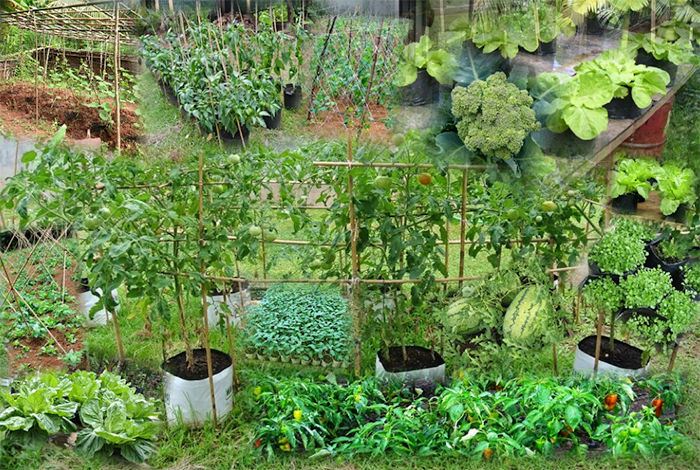
Ethnic neighboring island communities of Yap and its 14 atoll islets in the Western Pacific are among the most economically disadvantaged and environmentally vulnerable groups in the Federated States of Micronesia. Most climate change models and studies show that climate change effects will be disproportionately borne by these communities. Decreased rainfall and/or rising sea level trigger saltwater intrusion into traditional taro patches, low-lying forestry stands and other ecosystems in the atolls. Environmental and social pressures force communities to migrate to Yap Proper in search of better living conditions. Migrants from the atolls to Yap Proper with dreams of improving their living standards are often confronted by lack of jobs and mainstay, and remain destitute in a challenging environmental setting. This population required a survival strategy that involves growing vegetables, however, volcanic red soils predominant in the settlement pose severe challenges to the community in field cultivation. Since 2005, a comprehensive extension program has been extended to the community in volcanic soil management coupled with vegetable gardening utilizing alternate crop production practices. Despite limited resource settings and challenging soil conditions, these alternate crop production models helped atoll communities to successfully establish family-level vegetable gardens and directly participate in rebuilding their future. The sound soil management practices and alternate crop production models raised self-reliance of the displaced communities and helped to maintain a sustainable food production system. Nutrient-rich vegetables that were once beyond the family food menu of the community, now supplement their traditional diet of root crops and fish (Outreach project was supported by USDA-NIFA (Award #:2006-51200-03594) and USDA-OAO (Award #: 59-2501-10-008).

A collage of household gardens – A Real Homeland Security!

Filed Under: News from land grants, Yap Research Tagged With: outer islands, outreach, Yap

Role of biochar in improving the fertility of degraded volcanic soils in Yap

June 18, 2013

COLONIA, YAP, FSM. Dr. Murukesan Krishnapillai, Researcher/Extension Specialist, Yap Agricultural Experiment Station.

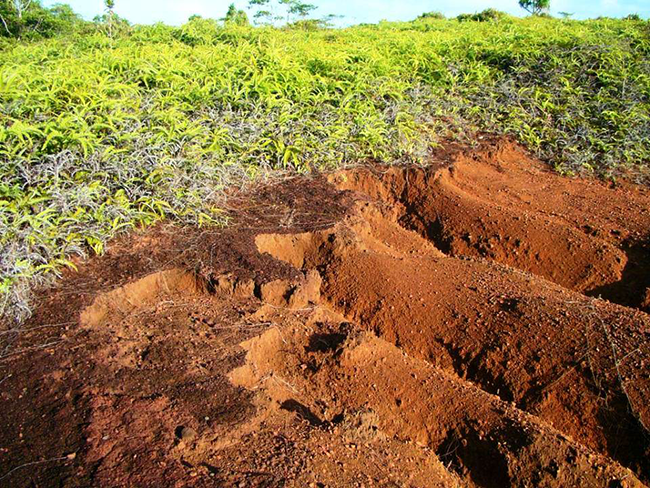
Volcanic red soils in Yap are highly degraded with low soil fertility. Heavy rainfall and warm climate promote uncontrollable erosion and depletion of nutrients through leaching. More stable materials rich in iron and aluminum oxide are left behind which results in soils that is acidic. Such degraded lands lack nutrients and high acidity prevents plants from growing and is, therefore, challenging to farm or grow trees. These soils either sustain forests because of lack of severe topsoil disturbance or are degraded through topsoil removal and then support mostly ferns that are adapted to harsh soil conditions. In order to reclaim such degraded lands, a good crop management program involving identification and correction of nutrient deficiencies and toxicities is required. This will not only help in establishing sustainable agriculture activities in degraded lands but also increase economic returns and reduce risks of environmental pollution. In the present research, the role of biochar as a soil conditioner for sustainable agriculture in degraded volcanic red soils of Yap (GAGIL series) is being studied using field experiments.

About 23.5 percent of Yap Proper has degraded volcanic soils.

Filed Under: News from land grants, Yap Research Tagged With: biochar, Yap

Climate-Smart agriculture

June 18, 2013

COLONIA, YAP, FSM. Dr. Murukesan Krishnapillai, Researcher/Extension Specialist, Yap Agricultural Experiment Station.

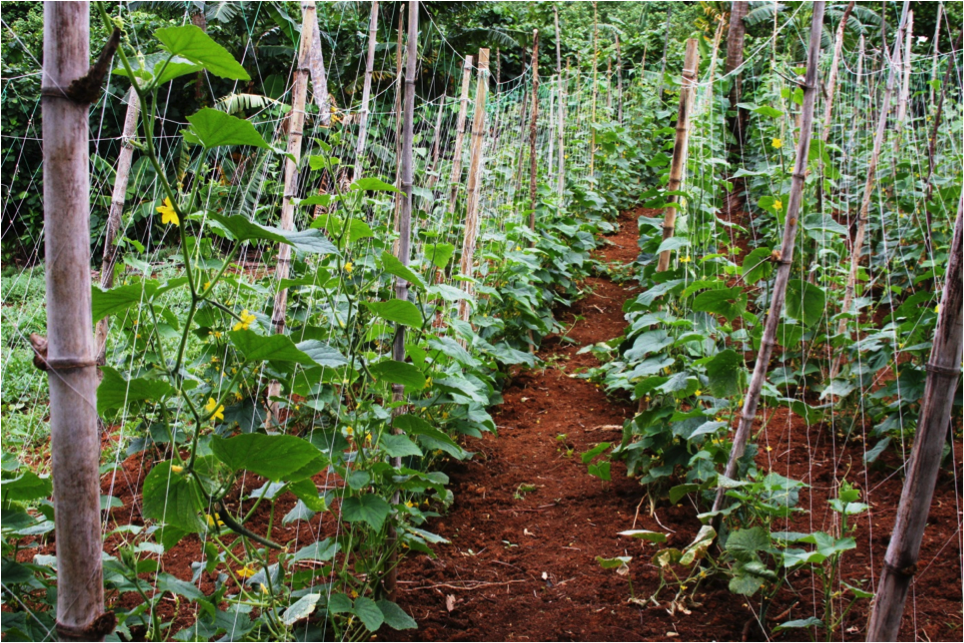
There is no one size fits all solution for climate change adaptation in agriculture. Climate change impacts agriculture and food security differently all over the world. Effects vary on different crops and farming systems, therefore a wide range of adaptation options are necessary. Preserving and enhancing food security requires agricultural production systems to change in the direction of higher productivity. Lower output variability in the face of climate risk and risks of an agroecological and socioeconomic nature is also essential. In order to tackle climate change and produce more food to feed the island population, an integrated “climate-smart” approach is needed. Food security and climate change are closely linked and key opportunities exist to transform the sector towards climate-smart systems that address both. Most estimates indicate that climate change is likely to reduce agricultural productivity, production stability and incomes in small islands. Developing climate-smart agriculture is thus crucial to achieving food security. One of our current Hatch Projects attempts to test science-based climate-smart agriculture practices that promote successful adaptation of small island agricultural systems to climate change and ensure food security.

Nutrient depleted soils need climate-smart practices.

Filed Under: News from land grants, Yap Research Tagged With: climate change, smart climate agriculture, Yap

  • Go to page 1
  • Go to page 2
  • Go to Next Page »

Primary Sidebar

Visit our programs

  • College of the Micronesia - FSM & Land Grant Program
  • College of the Marshall Islands & Land Grant Program
  • Palau Community College & Land Grant Program

Most frequently used words in tags

agriculture banana Bangladeshi biochar Black pepper chicken Chuuk climate change collaboration compost container gardening crab entomology Extension food security fruits grafting Kosrae lime livestock mangroves Marshall Islands outer islands outreach Palau Pearl pest Pineapple Pohnpei publications root crops salt tolerant smart climate agriculture sustainable sweet potato taro tissue culture training typhoon urban gardening vegetables World food day Yap Yap Day youth

For college staff

  • For staff

Locations of Micronesia Land Grant

June 2013
M T W T F S S
    Jul »
 12
3456789
10111213141516
17181920212223
24252627282930

and more . . .

Pearl farm management and halfpearl seeding training in Pakin Atoll, Pohnpei State, February 5-7, 2104

KOLONIA, POHNPEI, FSM. Dr. Manoj R. Nair (1) and Justino Smith (2) (1) Director & Chief Scientist, COM Land Grant … [Read More...] about Pearl farm management and halfpearl seeding training in Pakin Atoll, Pohnpei State, February 5-7, 2104

http://www.micronesialandgrant.org/wp-admin/

Copyright © 2022 ·Lifestyle Pro · Genesis Framework by StudioPress · WordPress · Log in