• Skip to secondary menu
  • Skip to main content
  • Skip to primary sidebar

Micronesia Land Grant Program

Good things are happening!

  • Home
  • About Us
    • Welcome to our website
    • Administration
    • Board of Regents
    • College of the Marshall Islands & Land Grant Program
    • College of the Micronesia – FSM & Land Grant Program
    • Palau Community College & Land Grant Program
    • Micronesia Land Grant Locations Map
    • Frequently asked questions
    • Contact Us
  • Land Grant people
    • All Micronesia Land Grant People
    • Micronesia Land Grant Administration & Regional Projects People
    • College of Micronesia-FSM Land Grant Administration
    • COM-FSM Chuuk Campus People
    • COM-FSM Kosrae Campus People
    • COM-FSM Pohnpei Campus People
    • COM-FSM Yap Campus People
    • College of Marshall Islands People
    • Palau Community College people
  • Research
    • Marshall Islands Agricultural Research Station
    • College of Micronesia – FSM – Research
      • Chuuk Agricultural Experiment Station
      • Kosrae Agricultural Experiment Station
      • Pohnpei Agricultural Experiment Station
      • Yap Agricultural Experiment Station
    • Palau Agricultural Experiment Station
    • Special Research Projects
  • Extension
    • College of the Marshall Islands – Extension
    • College of Micronesia – FSM – Extension
      • Chuuk Cooperative Extension Service
      • Kosrae Cooperative Extension Service
      • Pohnpei Cooperative Extension Service
      • Yap Cooperative Extension Service
    • Palau Community College – Extension
  • Instruction
    • College of the Marshall Islands – Resident Instruction
    • College of Micronesia – FSM – Resident Instruction
    • Palau Community College – Resident Instruction
  • Publications
  • Links
  • Job openings

Archives for June 2013

Palau Community College releases 360,000 mangrove crabs in conservation areas

June 14, 2013

NGIWAL STATE, PALAU. Dr. Miguel Delos Santos, Researcher/Extension Specialist, Palau Agricultural Experiment Station.

A total of 350,000 healthy crablets of mangrove crabs locally known as “chemang” were released by the PCC–CRE staffs in two conservation areas in Palau on December 31, 2012 and January 2, 2013. About 150,000 and 200,000 crablets were released near the mangroves of Ngemai Conservation Area in Ngiwal State and the Bkulengriil Conservation Area in Ngeremlengui State, respectively. These 30 to 32 days old crablets were produced at the PCC Multi-species Hatchery in Ngermetengel, Ngeremlengui State. The purpose of this release was to enhance the mangrove crab stock in the mangrove areas and provide a steady supply of this high valued sea food commodity in the Republic of Palau.
Governor Wilson Ongos, CRE- Vice President  Thomas Taro and aquaculture staff Irvin Dwight releasing crablets near the mangroves at  Bkulengriil Conservation Area in Ngeremlegui State.
Governor Wilson Ongos, CRE- Vice President Thomas Taro and aquaculture staff Irvin Dwight releasing crablets near the mangroves at Bkulengriil Conservation Area in Ngeremlegui State.

These chemang crablets were products of the recently completed hatch funded research project entitled “Seed Production of Mangrove Crabs in the Republic of Palau” which is being implemented by PCC-CRE’s Aquaculture Researcher Miguel Delos Santos. Six units of 10 tons capacity tanks were stocked with a total of 2.4 million mangrove crab larva and after 30 to 32 days of larval rearing, a total of 390,000 crablets were harvested. The remaining 40,000 crablets were reared at the outdoor nursery tanks at the PCC Hatchery and once the crablets reach about 1 to 2 inches in carapace length these will be distributed to prospective crab farmers in the country.
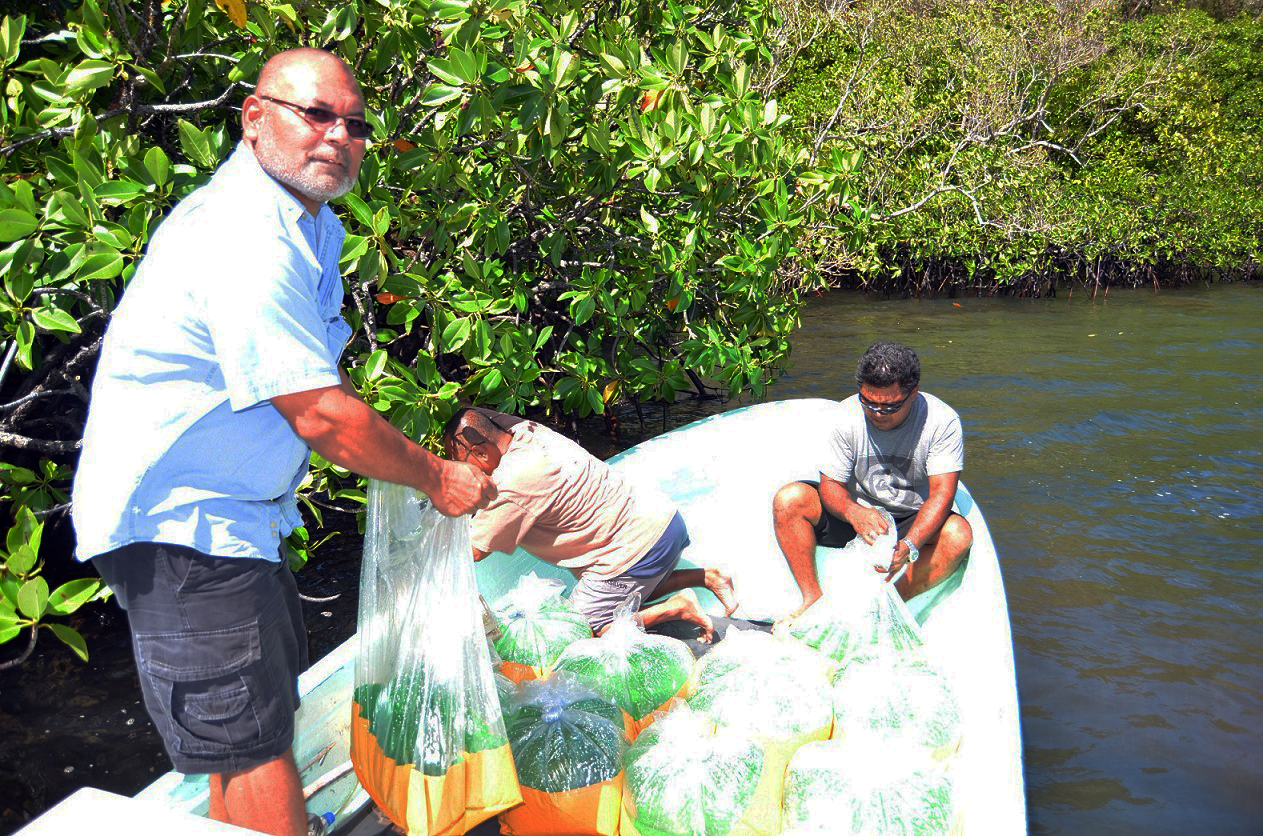
CRE- Vice President  Thomas Taro and aquaculture staff Dannies Uehara and Lyndon Masami releasing the chemang crablets near the mangroves at Ngemai Conservation Area.
CRE-Vice President Thomas Taro and aquaculture staff Dannies Uehara and Lyndon Masami releasing the chemang crablets near the mangroves at Ngemai Conservation Area.

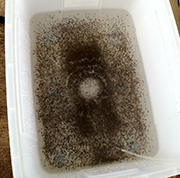
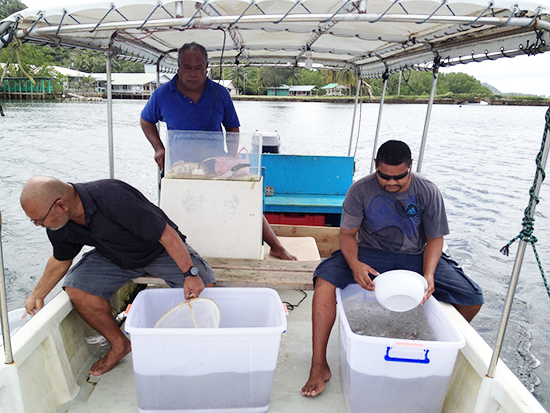
Hatchery-bred crablets place inside the plastic container.

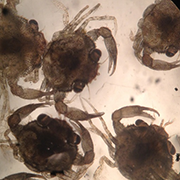
Close-up photo of a 30 to 32 days old released chemang crablets.

Filed Under: News from land grants, Palau Research Tagged With: crab, mangroves, Palau

High efficiency protocols developed for in vitro multiplication of banana, sweet potato and taro, and produced elite seedlings on mass-scale

June 14, 2013

KOSRAE, FSM. Dr. Virendra M. Verma, Researcher/Extension Specialist, Kosrae Agricultural Experiment Station.

Tissue cultured banana plants.

Apical meristem and lateral buds proved best for the establishment of aseptic cultures of banana, sweet potato and taro. Specific surface sterilization methods have been developed for particular explants. Various plant growth regulators, media composition and culture conditions have also been standardized for establishment of aseptic cultures and multiplication. Acclimatization techniques were standardized for the hardening of plantlets. High efficiency protocols have been developed for rapid multiplication and production of elite seedlings on mass-scale for different varieties of banana, sweet potato and taro. Participants knowledge and skills about micropropagation and nursery management techniques have been increased through collection and review of related literature; experimentation on micropropagation and conservation; establishment of nursery management system; development of high efficiency multiplication protocols; production of elite seedlings on mass-scale; showcase of new varieties; and organization of training workshops. Developed high efficiency multiplication protocols and nursery management systems have been utilized to produce elite seedlings of banana, taro and sweet potato in bulk quantity. Distribution of elite seedlings in bulk quantity has enabled local farmers to cultivate food crops on larger scales and therefore, has resulted in increased agricultural production. Many youths and adults have started establishing their farms and are cultivating different varieties of banana, taro and sweet potato. The extension activities have improved knowledge, created awareness and developed skills of participants in sustainable agriculture systems. The project activities have made extension agents capable of organizing trainings, teaching farmers and providing technical assistance, and apply gained knowledge and skills in the field. Ultimately the project has developed positive attitudes, zeal for learning techniques and farming aspects, and has changed the behavior of the participants. Harvested bananas and taro were showcased during the State Agriculture Fair and were awarded with the first prize for banana/taro category.

Filed Under: Kosrae Research, News from land grants Tagged With: banana, Kosrae, sweet potato, taro, tissue culture

Training for black pepper farmers on Pohnpei

June 12, 2013

POHNPEI, FSM. Kazuo Ishikawa, Cooperator, Japan Volunteer.

Eighty-five percent of world black pepper production is from India, Indonesia, Malaysia, and Brazil, 14% is from South Asia, Madagascar, Sri-Lanka, China, and Costa Rica. Pohnpei accounts for less than 1%.

black-pepper-workshop-participants
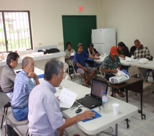
Workshop on black pepper attracts farmerss.

Pohnpei Cooperative Extension agents (CES) became involved in the project with only 38 existing black pepper farms. There are now 155 farmers with an estimated crop value of $500,000 per year. Extension agents were continued activities for the black pepper cultivation and production in Pohnpei Island by developing and airing radio programs for public awareness and by conducting demonstrations on black pepper cultivation techniques in communities around the island. Twice a month agents visit pepper farms around the island to conduct demonstrations on planting pepper, fertilizing, pruning methods, and other recommended activities.

CES staff advises new farmers on selecting farm sites, selecting fern posts as support for black pepper, and field layout. Agents encourage all pepper growers to apply more compost to improve soil fertility. CES agents identify and work with farmers who are willing and able to produce planting materials for sale and distribution. CES staff members also conducted a survey of all pepper farms to assess individual farms in term of number of vines of different ages in the field.

A three-day workshop on black pepper production was recently completed at Pohnpei CRE facility.

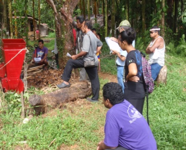
Class attendees watch how to safely operate a chipper.

Second day workshop was conducted in the community of Pihs madolenihmw, 19 farmers participated in the compost practice. Before the practice extension agents explained the purpose, the importance and benefit of compost to soil and the environment. Agents demonstrated how to start the chipper engine, advised the local materials needed, and the compost methods.

Filed Under: News from land grants, Pohnpei Extension Tagged With: Black pepper, collaboration, Pohnpei

  • « Go to Previous Page
  • Go to page 1
  • Go to page 2

Primary Sidebar

Visit our programs

  • College of the Micronesia - FSM & Land Grant Program
  • College of the Marshall Islands & Land Grant Program
  • Palau Community College & Land Grant Program

Most frequently used words in tags

agriculture banana Bangladeshi biochar Black pepper chicken Chuuk climate change collaboration compost container gardening crab entomology Extension food security fruits grafting Kosrae lime livestock mangroves Marshall Islands outer islands outreach Palau Pearl pest Pineapple Pohnpei publications root crops salt tolerant smart climate agriculture sustainable sweet potato taro tissue culture training typhoon urban gardening vegetables World food day Yap Yap Day youth

For college staff

  • For staff

Locations of Micronesia Land Grant

June 2013
M T W T F S S
    Jul »
 12
3456789
10111213141516
17181920212223
24252627282930

and more . . .

Pearl farm management and halfpearl seeding training in Pakin Atoll, Pohnpei State, February 5-7, 2104

KOLONIA, POHNPEI, FSM. Dr. Manoj R. Nair (1) and Justino Smith (2) (1) Director & Chief Scientist, COM Land Grant … [Read More...] about Pearl farm management and halfpearl seeding training in Pakin Atoll, Pohnpei State, February 5-7, 2104

http://www.micronesialandgrant.org/wp-admin/

Copyright © 2022 ·Lifestyle Pro · Genesis Framework by StudioPress · WordPress · Log in