• Skip to secondary menu
  • Skip to main content
  • Skip to primary sidebar

Micronesia Land Grant Program

Good things are happening!

  • Home
  • About Us
    • Welcome to our website
    • Administration
    • Board of Regents
    • College of the Marshall Islands & Land Grant Program
    • College of the Micronesia – FSM & Land Grant Program
    • Palau Community College & Land Grant Program
    • Micronesia Land Grant Locations Map
    • Frequently asked questions
    • Contact Us
  • Land Grant people
    • All Micronesia Land Grant People
    • Micronesia Land Grant Administration & Regional Projects People
    • College of Micronesia-FSM Land Grant Administration
    • COM-FSM Chuuk Campus People
    • COM-FSM Kosrae Campus People
    • COM-FSM Pohnpei Campus People
    • COM-FSM Yap Campus People
    • College of Marshall Islands People
    • Palau Community College people
  • Research
    • Marshall Islands Agricultural Research Station
    • College of Micronesia – FSM – Research
      • Chuuk Agricultural Experiment Station
      • Kosrae Agricultural Experiment Station
      • Pohnpei Agricultural Experiment Station
      • Yap Agricultural Experiment Station
    • Palau Agricultural Experiment Station
    • Special Research Projects
  • Extension
    • College of the Marshall Islands – Extension
    • College of Micronesia – FSM – Extension
      • Chuuk Cooperative Extension Service
      • Kosrae Cooperative Extension Service
      • Pohnpei Cooperative Extension Service
      • Yap Cooperative Extension Service
    • Palau Community College – Extension
  • Instruction
    • College of the Marshall Islands – Resident Instruction
    • College of Micronesia – FSM – Resident Instruction
    • Palau Community College – Resident Instruction
  • Publications
  • Links
  • Job openings

Archives for October 2018

Yap CRE promoted local food production methods during World Food Day 2018

October 23, 2018

Dr. Murukesan Krishnapillai, Researcher/Extension Specialist, Cooperative Research and Extension. YAP, FSM.

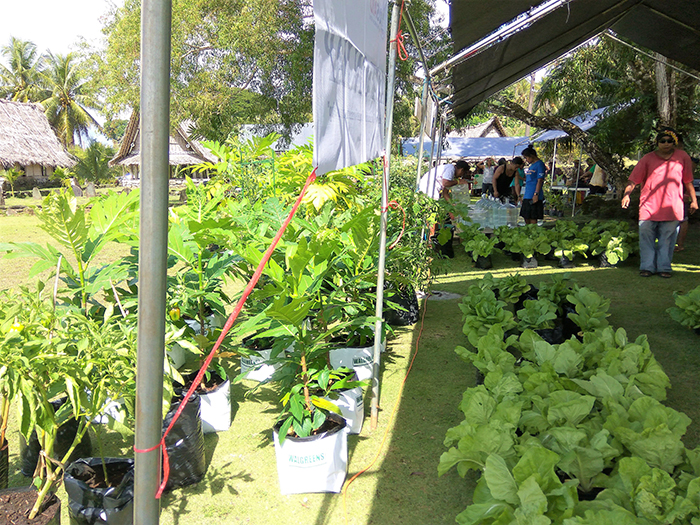
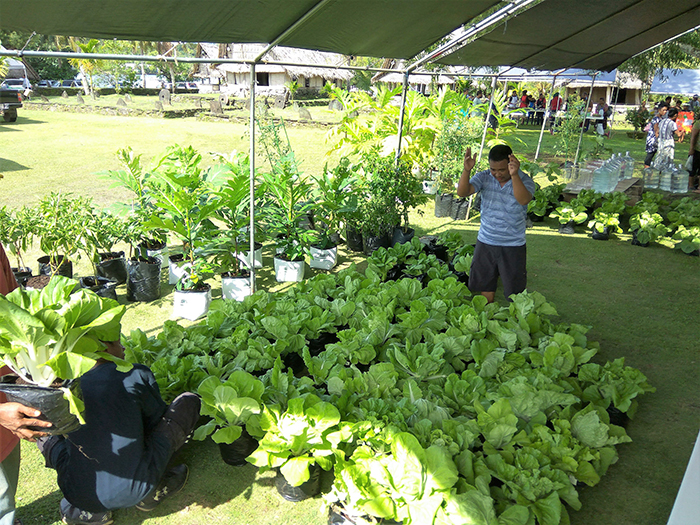
Yap observed World Food Day 2018 on Friday, October 19th. This event was organized by Yap Interagency Nutrition Education Council along with local partners. Yap CRE participated in the event showcasing a variety of locally produced fresh vegetables adopting small farm models.

World Food Day is a day of action dedicated to tackling global hunger. Held annually on 16th October, people from around the world come together to declare their commitment to eradicate worldwide hunger from our lifetime. The theme of this year’s event was “Our Actions Are Our Future: A #ZeroHunger World By 2030 is Possible.”

The new report, State of Food Security and Nutrition in the World 2018 confirms that the number of people suffering from hunger has been growing over the past three years, returning to levels from almost a decade ago. Multiple forms of malnutrition are evident in many countries, including Micronesia, adult obesity is growing even as forms of undernutrition persist. Climate variability and extremes are key drivers behind this rise, together with conflict and economic downturns. The report reveals new challenges on the road to #ZeroHunger, while setting out urgent actions needed to achieve the goal by 2030. The report suggests the need to strengthen local and global food systems to help more children and families access nutritious, affordable and sustainable diets.

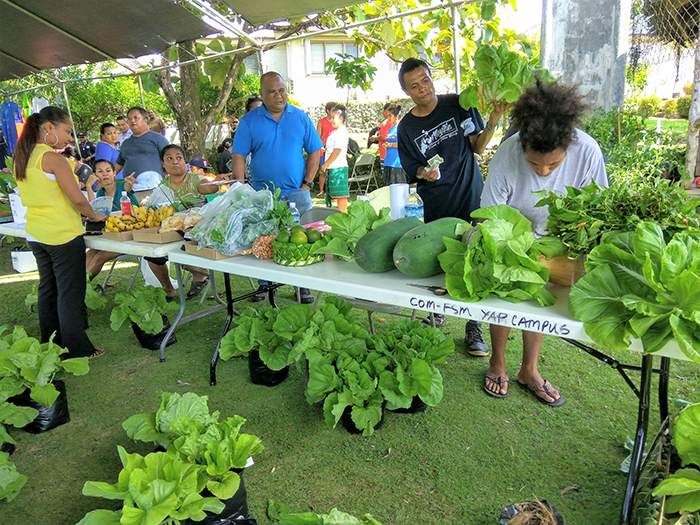
Since 2017, Yap CRE is partnering with Catholic Relief Services in ACT on Yap Project to support island communities and smallholders to enhance their agriculture strategies with outreach, technical assistance and extension trainings in climate adaptive techniques to make local food production more resilient to extreme weather events. The ACT on Yap Project participants joined World Food Day 2018 event by displaying and selling their garden produce. This event was also a forum to recruit interested participants to this project. We encourage everyone to engage in community gardening activities to enhance local food production and cater the needs of the island population. This would not only help to attain self-sufficiency but also reduce carbon footprints in the long run.

Whether you are a business, farmer, public servant, or simply someone who is willing to make a change, you can take action for #ZeroHunger!

What can you do to help achieve #ZeroHunger?

  • Do not waste food
  • Produce more with less
  • Adopt a more healthy, sustainable diet
  • Advocate for #zerohunger
A view of Yap CRE booth.
Vegetables on display at Yap CRE booth.
Fresh garden produce from ACT on Yap project participants on sale during the event.
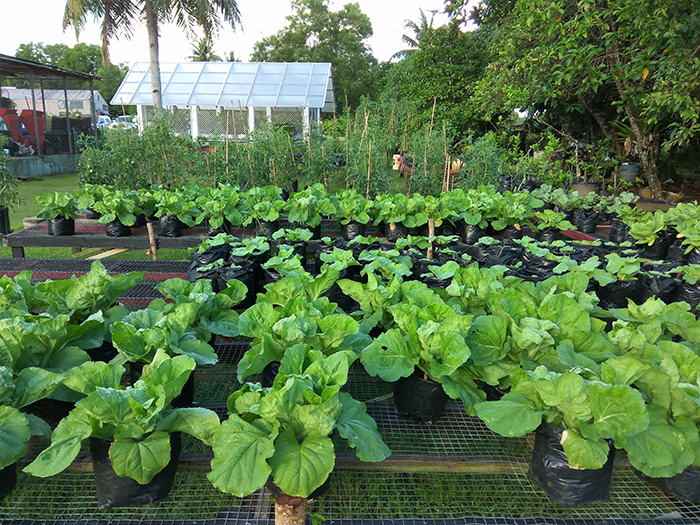
Yap CRE demonstration garden.

Filed Under: Featured Story, Yap Extension, Yap Research

Cocopith - An ecofriendly growing choice

October 8, 2018

Yap, FSM. Dr. Murukesan Krishnapillai, Researcher/Extension Specialist, Cooperative Research and Extension. YAP, FSM.

As with any garden, soil preparation is what really counts when it comes to growing successfully in containers. It’s the foundation. It’s the staff of life. In other words, selecting a right potting mix for your plants is key to success. Skimp on the soil, you will get weak, non-productive crops that require more work to maintain and are susceptible to all kinds of pest problems.

For years, Yap CRE has been promoting container gardening among communities for growing vegetables owing to some obvious challenges with native soils for field cultivation. The two predominant types of soils – upland soils underlain by volcanic material and upland soils underlain by schist – have different properties and therefore, behave differently and they need different management strategies. In our pursuit of finding a local alternative to soil, we found that coconut husk as an ideal medium for growing plants in containers. Coconut husk is made up of natural fibers called coir along with parenchymatous, spongy material coirpith that binds the fiber in the husk. Being made up of sclerified tissue, coconut fiber as such doesn’t retain much water at all. However, it does two things in the media: it creates aeration through voids it leaves in the coir, and it also gives the media optimal structure to further prevent compaction, which is important to having a healthy root zone. The pith acts like micro sponges where the moisture is stored. The fiber and the pith together make a great media with an excellent air to water ratio.

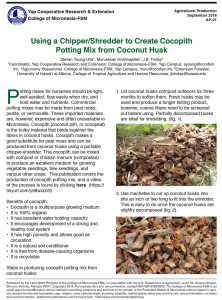
Over the years, we standardized a method to make a suitable potting mix from discarded coconut husks (click to see fact sheet). See the link for a video of preparing potting mix from coconut husk. We thank Dr. J.B. Friday of CTAHR, University of Hawai‘i at Manoa for assistance with the flyer and for producing the video.

Filed Under: Featured Story, Yap Extension, Yap Research

Primary Sidebar

Visit our programs

  • College of the Micronesia - FSM & Land Grant Program
  • College of the Marshall Islands & Land Grant Program
  • Palau Community College & Land Grant Program

Most frequently used words in tags

agriculture banana Bangladeshi biochar Black pepper chicken Chuuk climate change collaboration compost container gardening crab entomology Extension food security fruits grafting Kosrae lime livestock mangroves Marshall Islands outer islands outreach Palau Pearl pest Pineapple Pohnpei publications root crops salt tolerant smart climate agriculture sustainable sweet potato taro tissue culture training typhoon urban gardening vegetables World food day Yap Yap Day youth

For college staff

  • For staff

Locations of Micronesia Land Grant

October 2018
M T W T F S S
« Mar   Feb »
1234567
891011121314
15161718192021
22232425262728
293031  

and more . . .

Pearl farm management and halfpearl seeding training in Pakin Atoll, Pohnpei State, February 5-7, 2104

KOLONIA, POHNPEI, FSM. Dr. Manoj R. Nair (1) and Justino Smith (2) (1) Director & Chief Scientist, COM Land Grant … [Read More...] about Pearl farm management and halfpearl seeding training in Pakin Atoll, Pohnpei State, February 5-7, 2104

http://www.micronesialandgrant.org/wp-admin/

Copyright © 2022 ·Lifestyle Pro · Genesis Framework by StudioPress · WordPress · Log in